
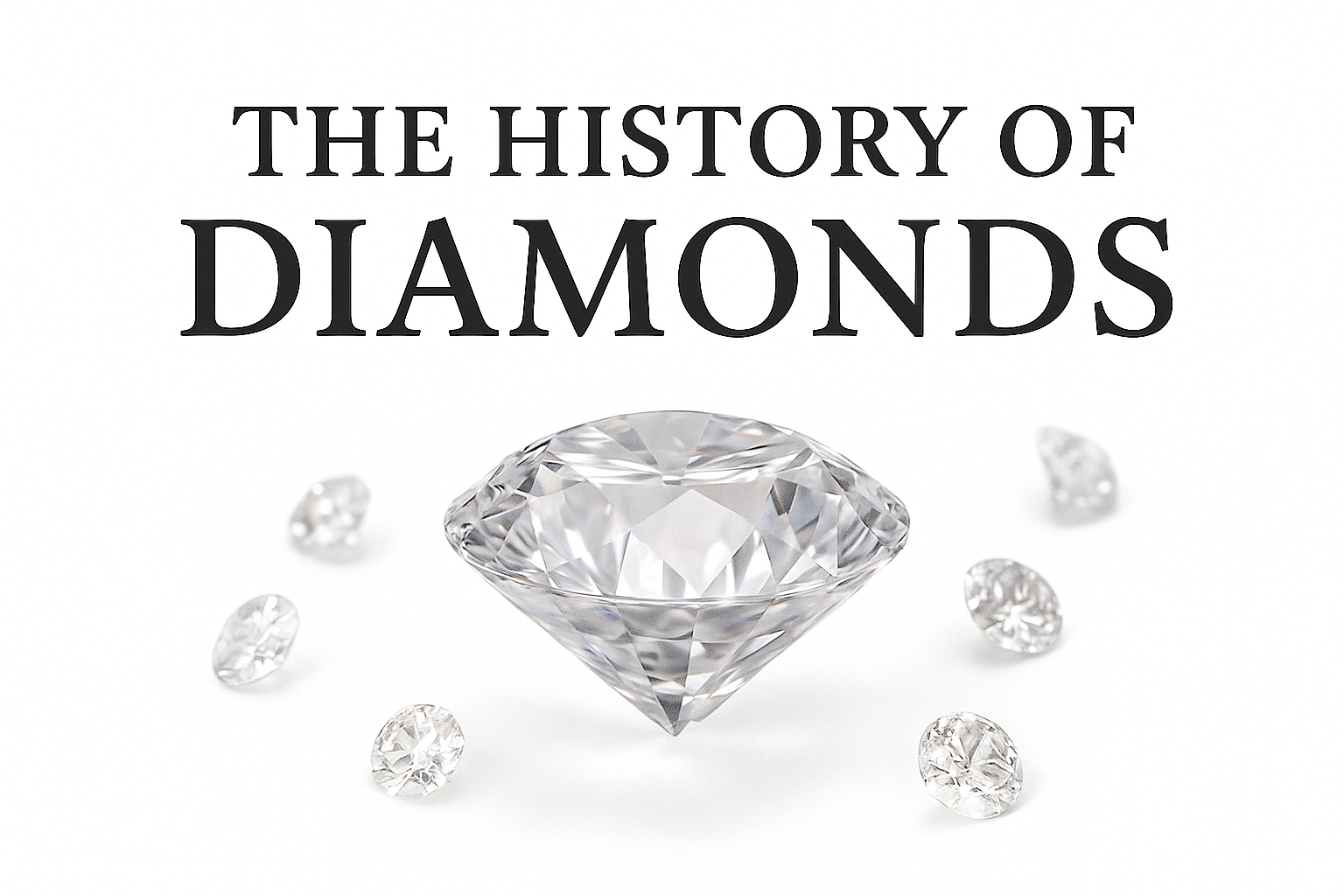
Diamonds are among the most admired gemstones in the world, celebrated for their brilliance, rarity, and durability. They are more than just sparkling stones; they are symbols of power, love, and eternity. The history of diamonds is a story that spans thousands of years—beginning with their discovery in ancient India and continuing through royal courts, global trade routes, massive mining operations, and now, the rise of lab-grown alternatives.
In this blog, we’ll explore the fascinating history of diamonds, tracing their journey from mystical stones of antiquity to icons of modern luxury.
The Ancient Origins of Diamonds in India
The earliest known diamonds were discovered in India around the 4th century BC, particularly in the riverbeds of the Krishna, Godavari, and Penner rivers. India remained the only known source of diamonds for nearly 2,000 years.
Unlike today’s polished gems, these diamonds were used in their natural form. Ancient Indians valued them not only for their beauty but also for their spiritual significance. Texts from the era describe diamonds as possessing mystical powers—believed to bring strength, protection from evil, and divine blessings.
They were also highly prized in trade. Merchants carried Indian diamonds along the Silk Road, where they reached China, Persia, and eventually Europe. These early stones set the foundation for the global diamond trade we know today.
Diamonds in Ancient Civilizations
As diamonds traveled through trade routes, they captured the imagination of different cultures:
- Greece: Ancient Greeks admired diamonds, calling them “adamas,” meaning “unconquerable.” They believed diamonds were fragments of stars or tears of the gods.
- Rome: Romans used diamonds as talismans for courage and invincibility. Soldiers carried them into battle, believing the stones brought protection.
- China: Instead of ornaments, diamonds were used as engraving tools to carve jade and other precious objects, thanks to their unmatched hardness.
These beliefs reveal that diamonds were valued far beyond aesthetics—they were seen as sources of strength, mystery, and even cosmic energy.
The Middle Ages: Diamonds and Royalty
By the Middle Ages, diamonds had gained a strong foothold in European courts. They became exclusive to royalty and the nobility, symbolizing status, power, and wealth. In some parts of Europe during the 13th century, laws even forbade common people from wearing diamonds.
The art of diamond cutting also began to emerge during this period. By the 14th and 15th centuries, craftsmen in Venice and Bruges developed methods to polish diamonds, unlocking new brilliance and creating the first faceted gems. This innovation transformed diamonds from rough stones into the dazzling jewels we recognize today.
One famous example from this period is the Koh-i-Noor diamond, discovered in India and passed through the hands of many rulers before becoming part of the British Crown Jewels. Its story highlights both the beauty and the political power diamonds carried in history.
The Shift: Brazil and South Africa
For centuries, India was the world’s primary supplier of diamonds, but its mines began to decline by the early 1700s.
- In 1725, Brazil became the next major source when rich diamond deposits were discovered in the Minas Gerais region. For more than 150 years, Brazil dominated global diamond production.
- In 1867, a discovery on the banks of the Orange River in South Africa changed the diamond industry forever. The Kimberley mines were established, leading to the world’s first diamond rush.
The South African discovery dramatically increased diamond supply, making diamonds more accessible to the wider public while maintaining their aura of prestige. This period also saw the rise of De Beers Consolidated Mines in 1888, which played a central role in shaping the modern diamond market.
The 20th Century: Diamonds as Symbols of Love
The 20th century cemented diamonds’ place in popular culture. Advancements in technology improved cutting and polishing techniques, allowing diamonds to sparkle like never before. But it was marketing that truly transformed the industry.
In 1947, De Beers launched one of the most successful advertising campaigns in history with the slogan: “A Diamond is Forever.” This campaign linked diamonds with eternal love and established the tradition of diamond engagement rings. Within a generation, giving a diamond ring became a cultural norm in many parts of the world.
During this period, major diamond-producing countries also expanded, including Russia, Botswana, Namibia, Australia, and Canada, ensuring a steady global supply.
The Rise of Lab-Grown Diamonds
The 21st century added a new chapter to diamond history: lab-grown diamonds. Created using advanced methods like High-Pressure High-Temperature (HPHT) and Chemical Vapor Deposition (CVD), these diamonds are physically, chemically, and optically identical to natural ones.
Lab-grown diamonds appeal to modern consumers because they are:
- Affordable compared to natural diamonds.
- Eco-friendly and considered more sustainable.
- Ethical, free from concerns related to conflict diamonds.
While traditional diamonds still hold strong value due to rarity and heritage, lab-grown diamonds are reshaping the industry, offering buyers a modern choice that aligns with changing values.
The Timeless Appeal of Diamonds
Despite the shifts in sourcing, technology, and consumer preferences, one fact remains: diamonds continue to symbolize beauty, strength, and everlasting love. From being mystical stones in ancient India to sparkling engagement rings today, diamonds have adapted to every era while maintaining their timeless charm.
Conclusion: A Gemstone Through the Ages
The history of diamonds is more than just a timeline of discoveries—it is a reflection of human culture, desire, and innovation. Diamonds have been spiritual symbols, royal treasures, trade commodities, and global fashion icons. Today, with the rise of both natural and lab-grown diamonds, the story continues to evolve.
No matter the source, diamonds remain a universal symbol of brilliance and eternity—a gemstone whose history is as fascinating as its sparkle.


